Full-Level: Developing a Quality Management System

Price: $1295.00
37.0 Contact Hours. Online/work at your own pace
Welcome to the Lean Practitioner Program
Description
Developing a Quality Management System for the Manufacture of Laboratory Developed Tests!
6.0 Contact hours ($59.99)
Course Description
This course explores the vast industry responsible for developing Laboratory Developed Tests (LDTs)—including laboratory tests, reagents, and protocols used to detect and treat illnesses. We will examine the history of LDTs and the FDA’s proposed regulations aimed at minimizing errors, aligning LDT oversight with the standards applied to medical device manufacturers.
Additionally, we will discuss the Verifying Accurate Leading-edge IVCT Development (VALID) Act of 2020, which was revived in response to concerns raised during COVID-19 testing. Learners will gain insight into proactive compliance strategies by exploring the steps needed to develop a robust Quality Management System (QMS) that meets regulatory requirements for LDT development.
This course will also provide a comprehensive understanding of accreditation, regulatory, and compliance requirements surrounding LDTs. Learners will engage in a crosswalk analysis, comparing existing QMS standardswith regulatory expectations. By identifying gaps in policies, procedures, and processes, participants will develop a QMS framework that aligns with CLIA standards, FDA regulations, and best practices—ensuring compliance and streamlining test development.

Who Should Take This Course
This course is ideal for laboratory technologists, technicians, administrators, quality roles and students looking to enhance their knowledge of quality management systems.
This Course Includes
- Engaging Instructional Videos – Gain in-depth knowledge through visual learning
- 10-Question Quiz – Test your understanding of key concepts
- Workbook, forms and links
- Course Assignment – Apply your newly acquired skills in a practical exercise
Course Agenda
- Introduction to Developing a Quality Management System
- Leadership & Training
- Pre-assessment of existing processes
- Phases of Development
- Design control & Process Control
- Stage Gate
- Process Validation
- Development of a Quality Management System
Learning Objectives
Upon completing this course, learners will be able to:
- Explain the importance of a proactive approach to LDT oversight and its impact on patient safety
- Interpret accreditation, regulatory, and compliance requirements related to Laboratory Developed Tests (LDTs)
- Convert regulatory requirements into practical, operational processes for building an effective Quality Management System (QMS)
Course Assignment
In this assignment, you will learn how to develop or enhance your existing Quality Management System (QMS) by identifying missing components and building a comprehensive framework for Laboratory Developed Tests (LDTs) that meets all regulatory requirements.
Note: This assignment includes a “QMS How-To” guide, which provides step-by-step instructions aligned with the course video presentations. Learners will follow along, completing each phase of the assignment, with action items prompting necessary tasks or activities.
The course also includes links to regulatory standards to support compliance and best practices.
Course Materials: How to Guide: Developing a Quality Management System: Quality Management System LLS Worksheet: Follow the lectures and complete assignments step by step: LDT QMS Workbook Forms
You must log in and have started this course to submit a review.
This online certificate program is designed to equip healthcare professionals with the knowledge and skills required to serve as a Lean Practitioner across clinical and healthcare environments. Through interactive learning modules, real-world healthcare case studies, and hands-on assignments, participants will develop a strong foundation in Lean principles, methods, and tools inspired by the Toyota Production System—a globally recognized framework for improving efficiency, quality, and patient-centered care.
This online certificate program is designed to equip healthcare professionals with the knowledge and skills required to serve as a Lean Practitioner across clinical and healthcare environments. Through interactive learning modules, real-world healthcare case studies, and hands-on assignments, participants will develop a strong foundation in Lean principles, methods, and tools inspired by the Toyota Production System—a globally recognized framework for improving efficiency, quality, and patient-centered care.
Your Roles as a Lean Practitioner
As a Lean Practitioner, you will collaborate closely with healthcare leaders, clinicians, and support teams to embed a culture of continuous improvement across the organization. Your work will ensure that processes are efficient, reliable, and centered on delivering high-quality patient care. You will:
- Establish and support Lean foundations across departments and service lines
- Train and mentor healthcare teams in Lean methodologies and daily improvement practices
- Facilitate Kaizen events and Gemba Walks to evaluate real-time care delivery and operational processes
- Apply root cause analysis to reduce variation, eliminate errors, and prevent recurrence
- Improve patient safety, care quality, and experience through standardized, reliable processes
- Ensure alignment with regulatory and accreditation standards such as CLIA, CAP, and FDA while optimizing system performance
This program prepares you to lead meaningful transformation in healthcare settings—enhancing efficiency, strengthening quality, and ultimately improving outcomes for patients and communities.
Course Agenda
In this course, you will build the skills and techniques needed to help your healthcare organization systematically eliminate waste and maximize value across diagnostic and clinical operations. Through a structured, hands-on learning approach, you will gain practical, real-world experience applying Lean principles and methodologies to improve efficiency, quality, and patient care outcomes.

This Program Includes
✔ 7 Course Modules – Covering essential Lean concepts and their application across healthcare and diagnostic workflows
✔ Instructional Video Presentations – Engaging, real-world content designed to reinforce learning and clinical relevance
✔ 7 Knowledge Checks – One per module to assess understanding and practical application
✔ 3 Reflection Activities – Encouraging critical thinking and deeper analysis within a healthcare context
✔ Capstone Project (7 Assignments) – Apply Lean principles to identify, analyze, and eliminate a recurring issue impacting workflow, quality, or patient care within your organization
Course Text
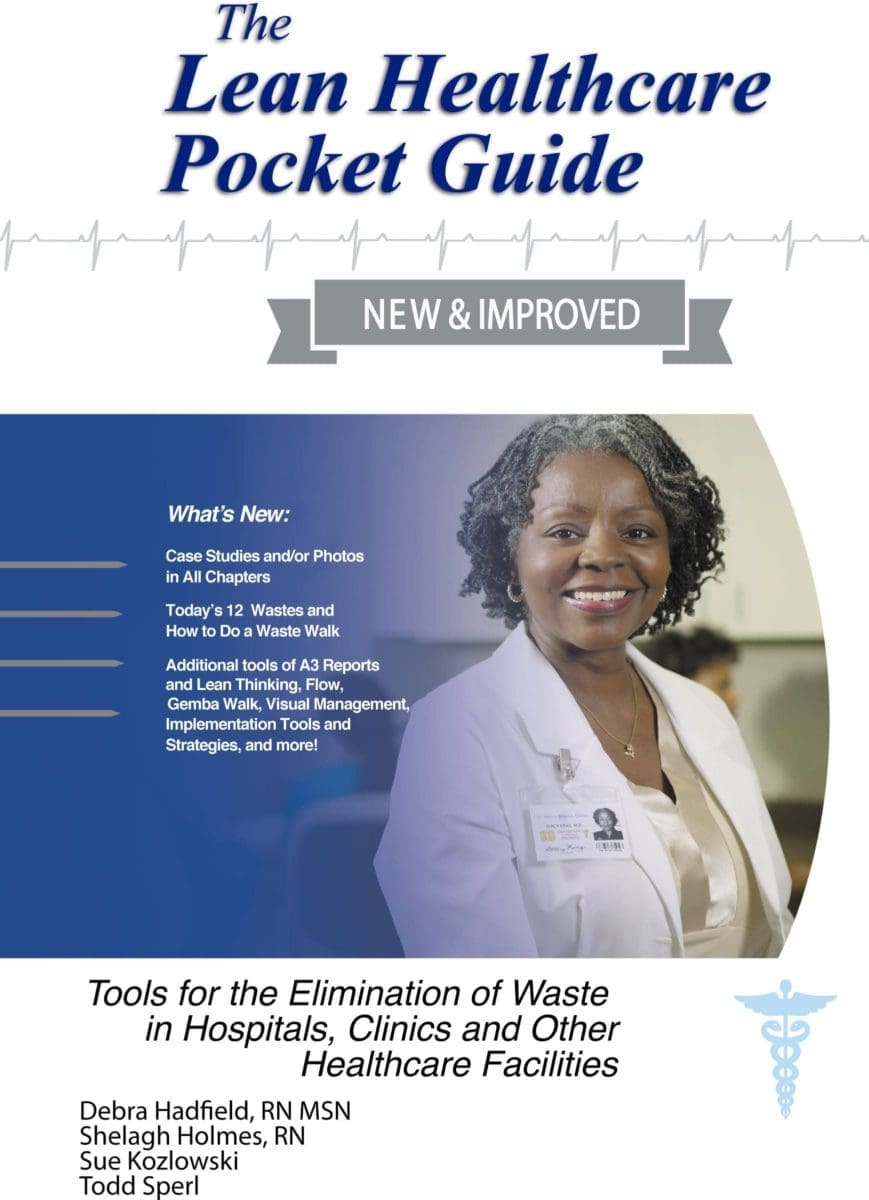
We will use the following book throughout this course: The New Lean Healthcare Pocket Guide XL – Tools for the Elimination of Waste in hospitals, clinics and other healthcare facilities. Click here to review the book:
Virtual Group Instruction
Our live virtual classrooms offer healthcare teams an interactive, engaging learning experience that supports deeper exploration of course concepts and real-world application within their clinical and operational environments. These sessions create a collaborative space where participants can:
✔ Participate in weekly live discussions with the instructor
✔ Ask questions and gain clarity on applying concepts in healthcare settings
✔ Share insights, challenges, and best practices with peers across disciplines
✔ Collaborate on strategies to implement meaningful, sustainable improvements within their organization
For more information on virtual team sessions, including available dates and times, please contact your instructor.

Course Project
The course project includes seven structured assignments, each designed to help you apply Lean tools and methodologies directly within your healthcare work environment. Through these hands-on activities, you will gain practical experience identifying inefficiencies, improving workflows, and implementing sustainable, patient-centered improvements.
Throughout the course, we will reference The New Lean Healthcare Pocket Guide XL to reinforce key concepts and support real-world application across hospitals, clinics, and other healthcare settings.
In addition, live virtual classrooms are available to help teams deepen their understanding and effectively translate learning into practice. These weekly, instructor-led sessions provide opportunities to:
✔ Ask questions and clarify course concepts in a healthcare context
✔ Share insights, challenges, and lessons learned with peers
✔ Collaborate on strategies for implementing Lean methodologies within your organization
For more information on virtual team sessions, including dates and times, please contact your instructor.
At the end of this course, you will be able to:
✔ Explain Lean principles, methodologies, and tools as they apply to clinical, administrative, and diagnostic healthcare workflows
✔ Apply Lean thinking to design a targeted improvement strategy within your healthcare or laboratory setting
✔ Plan and lead a 5S event, including preparation, implementation, and ongoing sustainment in a clinical environment
✔ Conduct a “Go and See” (Gemba) observation to uncover inefficiencies and identify opportunities for improving patient care and workflow
✔ Analyze waste and variation using a current-state value stream map to improve flow and reduce delays
✔ Apply the A3 problem-solving approach, understanding its structure and use in healthcare decision-making
✔ Plan and facilitate a Kaizen event, including defining objectives, engaging teams, and achieving measurable outcomes
This course equips you with practical Lean tools and techniques to drive continuous improvement, enhance efficiency, and improve patient outcomes across healthcare settings.